Fiber Splicing Solutions for NYC Financial Services
Advanced Business Communications Helps NYC Financial Services Client Overcome Fiber Splicing and Ribbon Cable Challenges
Confidential Financial Services Client
Financial Services & Enterprise Network Infrastructure
New York City Metropolitan Area
Fiber Splicing Preparation, Ribbonizing Training & Infrastructure Supply Chain Planning
Project Snapshot: Solving a Critical Fiber Challenge
For financial services organizations, reliable fiber optic infrastructure is essential to supporting high-performance networks, expanding bandwidth requirements, and maintaining long-term connectivity.
But even the most carefully planned infrastructure projects can face significant challenges when critical materials become difficult to obtain.
When a New York City financial services client encountered ribbon fiber optic cable supply constraints, Advanced Business Communications (ABC) introduced a practical alternative designed to support fiber splicing preparation, improve installation flexibility, and address potential project delays.
Rather than relying exclusively on factory-manufactured ribbon cable with extended lead times, ABC helped contractors understand how suitable loose tube fiber optic cable could be converted into ribbon configurations through a specialized process known as fiber ribbonizing.
ABC's involvement extended beyond introducing a technical solution. The team provided hands-on contractor training, coordinated with distribution partner Wesco, and helped align material procurement with future installation requirements.
The approach demonstrated how technical expertise, education, and proactive planning can help organizations navigate fiber infrastructure challenges without relying solely on traditional procurement methods.
One of ABC's most impactful contributions has been its long-standing partnership with the IBEW Local 3 Electrical Industry Training Center, helping electricians, contractors, and apprentices develop the skills needed to install and support modern fiber optic infrastructure.
Today, hundreds of professionals have benefited from the training programs, curriculum development, and industry expertise that ABC helped introduce, creating a foundation for successful fiber deployments throughout New York City and beyond.
When Ribbon Cable Shortages Disrupt Project Planning
Ribbon Fiber Optic Cable Shortages Threaten Installation Timelines
As enterprise networks expand, demand for high-fiber-count cabling continues to create challenges for infrastructure teams responsible for large-scale connectivity projects.
Ribbon fiber optic cable plays an important role in these environments by organizing multiple optical fibers into structured groups, commonly containing 12 fibers. This arrangement supports mass fusion splicing, allowing technicians to join multiple fibers in a single splicing operation using compatible equipment.
For financial services organizations managing complex network infrastructure, these capabilities can be particularly valuable.
However, the availability of factory-manufactured ribbon cable can become a significant obstacle.
The New York City financial services client faced market constraints that made obtaining the required ribbon cable configuration difficult within conventional project planning windows.
According to ABC's project discussions, traditional ribbon cable lead times could approach 12 months.
For contractors managing construction schedules, labor availability, and infrastructure installation requirements, waiting that long for a critical material could create substantial scheduling challenges.
The client needed more than another cable supplier.
They needed a practical installation alternative, hands-on training, and a partner to keep the project moving.
Why Conventional Cable Sourcing Wasn't Enough
Fiber Splicing Requirements Meet Supply Chain Constraints
Traditional high-fiber-count installations often rely on factory-manufactured ribbon fiber optic cable because its organized fiber structure supports efficient mass fusion splicing.
But when ribbon cable is difficult to source, relying exclusively on this approach can limit a project's flexibility. Loose tube fiber optic cable offers another construction method, with individual optical fibers housed within protective tubes rather than pre-bonded into ribbons. While loose tube cable can be suitable for many enterprise infrastructure applications, its individual fibers require additional preparation when installers intend to use ribbon-based mass fusion splicing methods.
This creates a technical challenge.
Contractors need to understand how to organize, prepare, and ribbonize individual fibers correctly before proceeding with compatible splicing procedures. Without proper training, introducing a different cable preparation method can add complexity to an already demanding installation.
Meanwhile, simply changing cable specifications does not resolve the broader challenges of material availability, contractor readiness, and project coordination. The financial services client needed an approach that addressed these interconnected issues.
The solution required more than a product substitution. It required technical guidance, hands-on training, and proactive infrastructure planning.
ABC's Approach: A Smarter Way to Prepare Fiber
A Smarter Approach to Fiber Splicing Through Ribbonizing
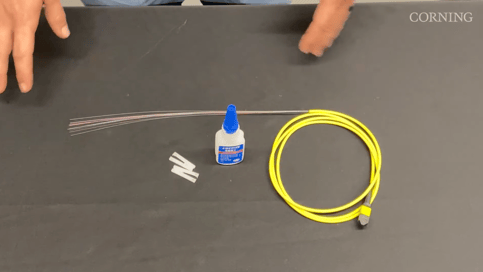
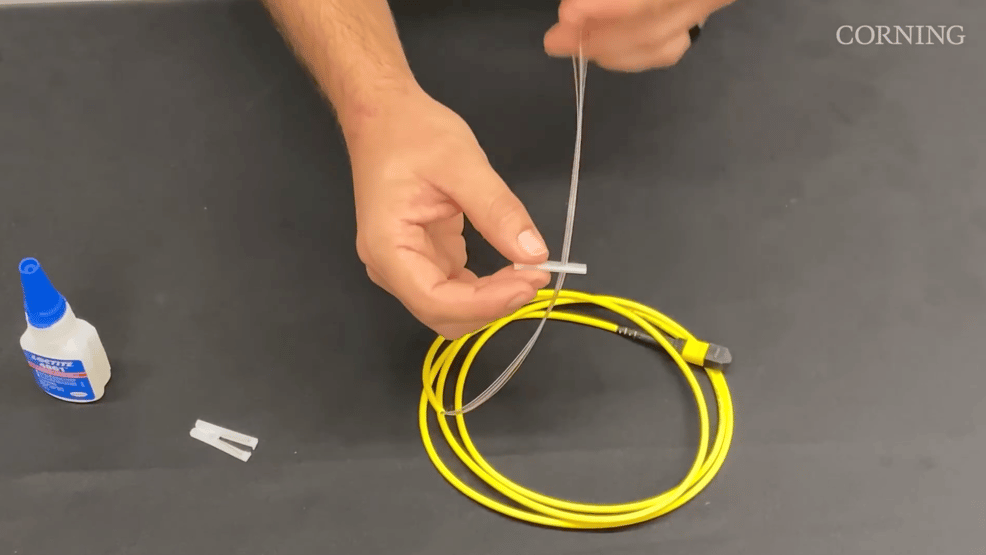
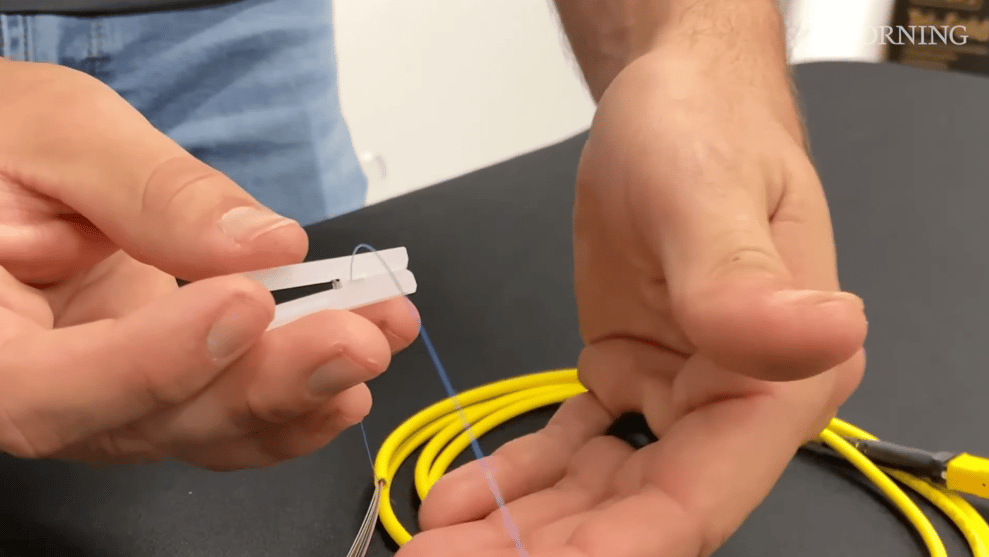
Recognizing the limitations created by ribbon cable supply constraints, ABC introduced a ribbonizing solution designed to give contractors greater flexibility when preparing fiber optic cable for installation. Fiber ribbonizing is the process of organizing and bonding individual optical fibers into a ribbon configuration using specialized tools and materials. A common configuration groups 12 individual fibers together, allowing them to be prepared for compatible mass fusion splicing procedures. For projects involving hundreds or thousands of optical fibers, this technique can provide an alternative to relying exclusively on factory-ribbonized cable.
ABC's approach centered on helping contractors understand how suitable loose tube fiber could be ribbonized while connecting the technical process to the client's broader project requirements. Rather than simply recommending a different cable, ABC developed a coordinated support approach that combined technical consultation, installation education, distributor collaboration, and material forecasting.
ABC Worked Directly With Contractors and Distribution Partners To:
- Introduce fiber ribbonizing as an alternative approach when factory-ribbonized cable availability was constrained
- Demonstrate how individual loose tube fibers can be organized into ribbon configurations
- Provide hands-on education supporting proper fiber preparation for compatible mass fusion splicing
- Help contractors understand the tools, materials, and procedures involved in ribbonizing
- Coordinate with Wesco to develop a ribbonizing package and support material procurement
- Encourage early project forecasting to align cable availability with installation schedules
- Provide ongoing technical guidance as contractors evaluate upcoming infrastructure projects
ABC also worked with Corning's technical resources to support the broader ribbonizing initiative. Rather than positioning the manufacturer or distributor as the solution itself, ABC brought together the relevant expertise and resources to address the client's infrastructure challenge.
The value was not simply in identifying an alternative cable preparation method. It was in making that method accessible, understandable, and practical for the people responsible for installation.
From Hands-On Training to Supply Chain Coordination
Bringing Fiber Ribbonizing Training Directly to Contractors
One of the most important elements of ABC's approach was its commitment to hands-on education. Specialized fiber ribbonizing training is not always readily available locally, and traveling to a distant training facility can create additional scheduling and logistical challenges for contractors.
ABC addressed this by bringing technical training directly to customers and installation teams throughout the New York metropolitan area. Led by ABC, the sessions are designed to accommodate varying levels of contractor experience and project complexity. Depending on the customer's needs, training can range from a focused one- to two-hour session to a more extensive, hands-on program.
ABC offers this education at no additional charge as part of its customer support approach. The training introduces installers to the ribbonizing process, explains how individual fibers are prepared and organized, and helps teams understand how the technique relates to their fiber optic installation requirements. For contractors accustomed to traditional ribbon cable configurations, this provides an opportunity to develop additional technical capabilities.
ABC's goal is not simply to demonstrate a new method. It is to help contractors confidently evaluate when and how ribbonizing can support their projects.
Connecting Fiber Splicing Preparation With Supply Chain Planning
ABC recognized that technical education alone would not resolve the client's infrastructure challenge. Even with a practical ribbonizing approach, contractors still needed appropriate cable, ribbonizing materials, and a reliable procurement strategy.
Working alongside distribution partner Wesco, ABC helped develop a coordinated ribbonizing package to connect the technical solution with material fulfillment. This collaboration also reinforced the importance of early communication. Rather than waiting until a project was approaching installation, ABC encouraged contractors to identify upcoming material requirements months in advance. These conversations helped connect technical planning with supply chain forecasting, giving the relevant parties greater visibility into anticipated project needs.
ABC's involvement extended beyond the training session to include ongoing coordination, follow-through, and discussions about future infrastructure requirements.
By combining technical education with proactive procurement planning, ABC helped create a more coordinated approach to addressing ribbon cable availability challenges.
The Impact: Greater Flexibility and Project Readiness
A Potentially Faster Alternative to Traditional Ribbon Cable Procurement
The ribbonizing approach provided an alternative planning path for a client facing constrained ribbon cable availability.
ABC's project discussions identified conventional ribbon cable lead times approaching 12 months, while the ribbonizing alternative presented an estimated planning window of approximately 12 weeks. Although actual lead times depend on material specifications, availability, quantities, and project requirements, the comparison highlighted the potential scheduling advantages of evaluating alternative installation methods.
Greater Flexibility for Fiber Optic Installation
By introducing ribbonizing techniques, ABC helped contractors understand how suitable loose tube fiber optic cable could support ribbon-based installation workflows. This provided additional flexibility when evaluating high-fiber-count projects where factory-ribbonized cable availability presented challenges.
Expanded Contractor Knowledge and Capabilities
Through hands-on training, ABC helped installers become familiar with the ribbonizing process and its relationship to fiber optic splicing preparation. The educational approach supported greater technical confidence and gave contractors exposure to an additional method for preparing fiber in demanding infrastructure environments.
Improved Material Planning and Coordination
ABC's collaboration with Wesco connected the technical solution with distribution resources and advanced material forecasting.
By encouraging earlier conversations about upcoming projects, ABC helped establish a more proactive approach to addressing potential procurement challenges.
Stronger Long-Term Infrastructure Support
The engagement demonstrated the value of having a local infrastructure partner capable of connecting technical expertise, contractor education, and supply chain coordination. Rather than treating each challenge independently, ABC brought these elements together to support a more comprehensive project planning process.
Building Resilience Into Future Fiber Projects
For financial services organizations, successful infrastructure projects depend on more than selecting the right equipment. They require careful coordination between technical requirements, material availability, installation capabilities, and long-term network demands.
ABC's ribbonizing initiative demonstrated how a consultative infrastructure partner can help organizations respond to supply constraints while building additional capabilities within their contractor teams.
The value extends beyond a single cable order or training session.
Contractors gain knowledge of alternative fiber preparation techniques. Infrastructure teams gain access to local technical resources. Distributors become part of earlier procurement conversations. End users benefit from more informed project planning. These capabilities are relevant across financial services, healthcare, education, commercial buildings, and data center environments where high-fiber-count connectivity and reliable project execution are essential.
As enterprise networks continue to evolve, ABC remains committed to helping customers navigate infrastructure challenges through education, technical expertise, and long-term industry partnerships.
Because delivering future-ready infrastructure requires more than innovative products. It requires the right expertise, planning, and follow-through.
Your Partner in Future-Ready Infrastructure
Founded in 1986, Advanced Business Communications (ABC) is a trusted advisor and solutions provider specializing in fiber optic cabling, enterprise infrastructure, power, and connectivity technologies.
Working alongside industry-leading manufacturers and partners, ABC helps organizations design, deploy, and support future-ready infrastructure through technical consultation, contractor education, procurement coordination, and ongoing project support. From initial planning through implementation, ABC brings the industry knowledge, relationships, and hands-on expertise needed to help customers address complex infrastructure challenges.
"We Deliver."
"We faced a 52-week lead time for ribbon cable. In just 51 seconds, we identified an alternative solution that kept the project moving”
— Confidential Financial Services Client
Let's Solve Your Next Fiber Infrastructure Challenge
Facing fiber optic cable shortages, extended lead times, or complex installation requirements? ABC helps organizations evaluate practical infrastructure solutions, coordinate technical resources, and prepare for future connectivity demands.
Contact ABC to discuss your next fiber infrastructure project or schedule a free assessment.
What Is Fiber Splicing?
Fiber splicing is the process of permanently joining two optical fibers to create a continuous optical connection. Common methods include fusion splicing, which uses heat to join fibers, and mechanical splicing, which aligns and secures fibers using a specialized connector or fixture.
For high-fiber-count infrastructure projects, mass fusion splicing can join multiple fibers simultaneously when they are properly arranged in compatible ribbon configurations.
What Is the Difference Between Fiber Splicing and Fiber Ribbonizing?
Fiber splicing joins optical fibers together, while fiber ribbonizing organizes individual fibers into ribbon configurations that can support mass fusion splicing.
Ribbonizing is a preparation process rather than a replacement for splicing. It can provide additional installation flexibility when suitable loose tube fiber is available but factory-ribbonized cable is constrained.
Can Loose Tube Fiber Optic Cable Be Used for Ribbon Splicing?
Yes. Suitable loose tube fiber optic cable can be prepared for ribbon-based mass fusion splicing through a ribbonizing process.
Individual fibers are organized and bonded into ribbon configurations using appropriate tools and materials. Proper preparation, equipment compatibility, and installer training are important considerations.
How Can Organizations Address Fiber Optic Cable Supply Delays?
Organizations can reduce exposure to procurement delays by forecasting material requirements early, coordinating with distribution partners, and evaluating technically appropriate alternatives.
Advanced Business Communications supports these efforts through infrastructure consultation, hands-on ribbonizing education, distributor coordination, and proactive project planning.
Future-Proof
Your Infrastructure
ABC helps organizations design, deploy, and support future-ready infrastructure while providing the expertise and education needed to ensure long-term success. Connect with an ABC representative today to discuss the right infrastructure solution for your needs.
This section will include a testimonial from either a customer, staff member, or industry professional. It will mention something relevant to the companies capabilities.
Author Name
What Is Fiber Splicing?
Fiber splicing is the process of permanently joining two optical fibers to create a continuous optical connection. Common methods include fusion splicing, which uses heat to join fibers, and mechanical splicing, which aligns and secures fibers using a specialized connector or fixture.
For high-fiber-count infrastructure projects, mass fusion splicing can join multiple fibers simultaneously when they are properly arranged in compatible ribbon configurations.
What Is the Difference Between Fiber Splicing and Fiber Ribbonizing?
Fiber splicing joins optical fibers together, while fiber ribbonizing organizes individual fibers into ribbon configurations that can support mass fusion splicing.
Ribbonizing is a preparation process rather than a replacement for splicing. It can provide additional installation flexibility when suitable loose tube fiber is available but factory-ribbonized cable is constrained.
Can Loose Tube Fiber Optic Cable Be Used for Ribbon Splicing?
Yes. Suitable loose tube fiber optic cable can be prepared for ribbon-based mass fusion splicing through a ribbonizing process.
Individual fibers are organized and bonded into ribbon configurations using appropriate tools and materials. Proper preparation, equipment compatibility, and installer training are important considerations.
How Can Organizations Address Fiber Optic Cable Supply Delays?
Organizations can reduce exposure to procurement delays by forecasting material requirements early, coordinating with distribution partners, and evaluating technically appropriate alternatives.
Advanced Business Communications supports these efforts through infrastructure consultation, hands-on ribbonizing education, distributor coordination, and proactive project planning.