Next-Gen LAN Knowledge Center
Explore the Next-Gen LAN Knowledge Center for insights on Corning's solutions in software-defined networking and remote powering. Find resources to...
AI demand is pushing power infrastructure to its limits. ABC breaks down the latest data center power constraints and how to solve them.
If you’ve been following data center power constraints news today, the pattern is becoming impossible to ignore.
AI workloads are scaling faster than anyone anticipated, and the electrical grid (long considered a stable foundation) is now struggling to keep pace. What was once a background consideration has become the defining issue in how data centers are designed, deployed, and expanded.
Across major markets, power availability is no longer guaranteed. Instead, it’s becoming the single biggest factor determining whether a project moves forward, stalls, or never gets built at all.
The current wave of constraints isn’t caused by one issue. It’s the result of five major shifts happening at the same time.
While AI is often seen as the primary driver of growth, it’s only part of the story.
As discussed by ABC’s Ken DePalo on Fibreside, data center expansion is being fueled by a combination of factors including rising bandwidth demand, exponential enterprise data growth, and increasing reliance on digital infrastructure across industries.
This broader surge in demand is creating a “hockey stick” growth curve where infrastructure needs are accelerating faster than traditional systems were designed to handle.
Understanding this context matters. Multiple growth drivers are coming together at the same time, creating pressure across the industry. Breaking them down helps clarify where that pressure is coming from.
Utilities are under pressure from every direction: data centers, electrification, and renewable integration. Expanding grid capacity takes years, and interconnection queues are backed up across major markets.
Even well-funded projects are being delayed simply because power isn’t available when needed.
AI is changing how energy is consumed inside data centers.
In addition to spreading workloads across large environments, organizations are concentrating computation into high-density deployments. This dramatically increases power requirements per rack and puts strain on traditional infrastructure models.
At events like Data Center Dynamics (DCD) in New York this year, this shift was a central theme highlighting how AI is forcing a complete rethink of infrastructure planning.
Connecting to the grid is no longer straightforward.
Projects often sit in queues for years, approval timelines are unpredictable, and only a fraction of proposals move forward. This uncertainty impacts budgets, timelines, and long-term strategy.
To move faster, operators are turning to behind-the-meter data center power solutions.
These strategies allow organizations to generate, store, and manage power on-site, reducing reliance on congested utility infrastructure.
Eaton’s “Data Centers As A Grid” approach shows how facilities can evolve into active energy assets rather than passive consumers.
This shift enables greater control, resilience, and speed in deployment.
Power challenges don’t stop at the data center. They extend into real-world operations.
In environments like retail distribution centers, healthcare systems, and enterprise campuses, even small disruptions can create measurable inefficiencies. Something as simple as a dead device can slow workflows, delay operations, and impact productivity.
This is where modern charging infrastructure plays a critical role.
Solutions like Eaton’s charging stations are designed to support large fleets of devices, charging up to dozens at once while keeping them secure, organized, and ready for use. With features like fast charging, structured cable management, and flexible deployment options, these systems help eliminate one of the most preventable causes of downtime.
Instead of reacting to failures, organizations can ensure devices are consistently powered, synchronized, and operational, keeping teams productive in fast-paced environments.
Want to evaluate how power reliability is impacting your operations?

Yes, and recent reporting confirms it.
Recent coverage shows how widespread this issue has become. A growing number of data center projects are being delayed due to power availability, equipment shortages, and permitting challenges, all while demand continues to accelerate.
The real challenge is how quickly power can be delivered to keep up with demand.
This coverage highlights a growing reality: expansion is being slowed not by lack of demand, but by the ability to deliver power at scale, as reported by Fortune.
However, this isn’t a sign of instability. It’s a sign of rapid growth outpacing legacy infrastructure.
The demand is strong. The investment is there. Innovation is happening.
What’s changing is how power is delivered.
While constraints dominate headlines, the industry is already adapting.
Eaton, for example, is advancing a “grid-to-chip” strategy connecting power infrastructure from the utility level down to the processor. This approach integrates intelligent power distribution, real-time monitoring, and on-site energy systems to manage AI-scale demand.
This includes innovations like:
Eaton has also introduced edge-based detection technology that identifies rapid fluctuations in power demand, helping operators respond before instability impacts operations.
A critical concept emerging from this shift is “speed-to-power.” It refers to how quickly organizations can secure and deploy power for new infrastructure, as outlined in the Federal Register.
The ability to deliver power quickly is now essential for maintaining leadership in AI and digital infrastructure.
Organizations that solve this challenge can:
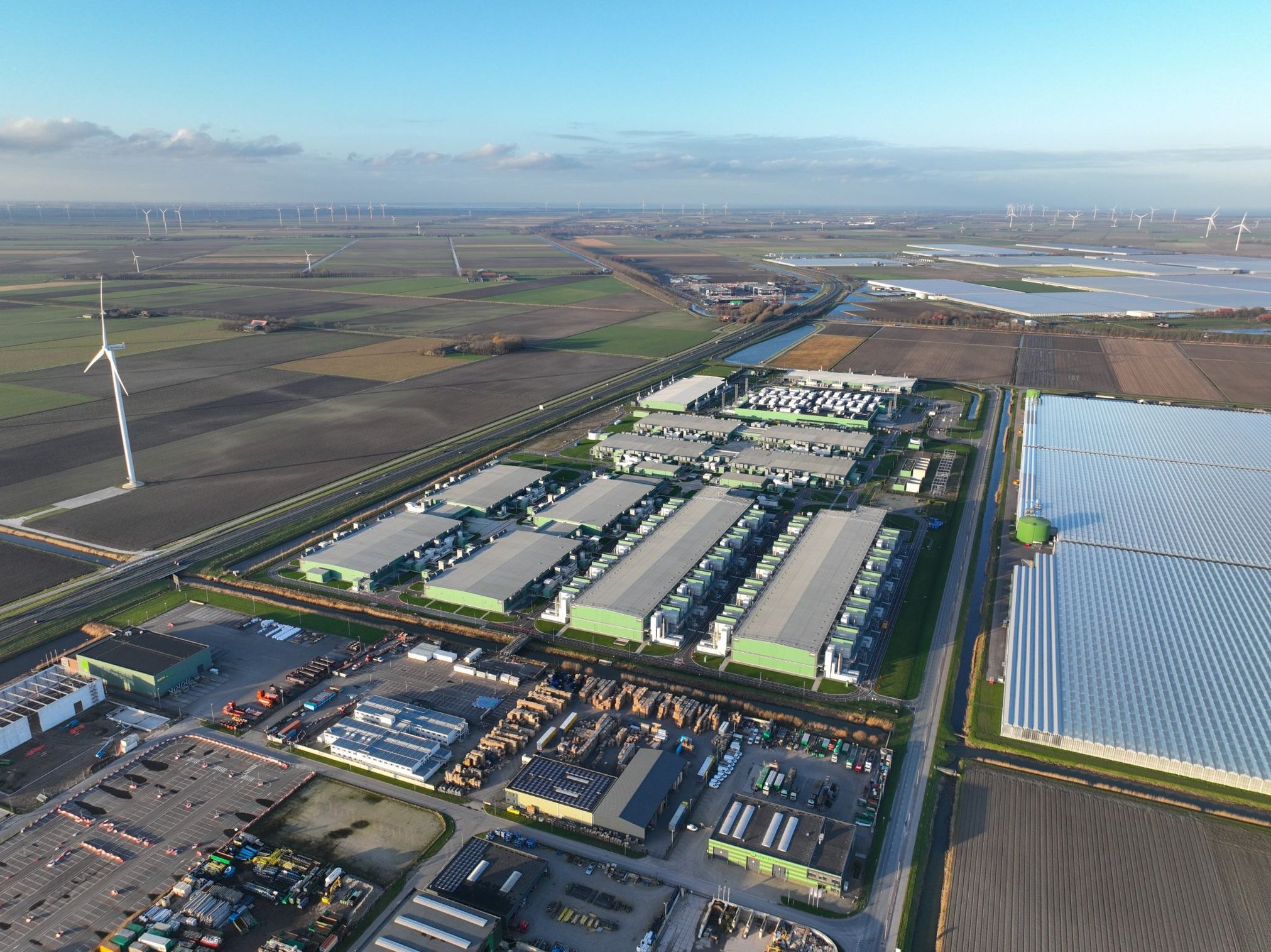
Power constraints are becoming a defining factor in how modern infrastructure is designed and deployed.
At Advanced Business Communications, we help organizations take a proactive approach identifying risks early and designing infrastructure that scales with modern demand.
Through our A.C.E. (Airspan, Corning, Eaton) Assessment, we combine the strengths of three global leaders in fiber, power, and connectivity to ensure your systems are built right from the start.
With the right strategy, you can:

Explore the Next-Gen LAN Knowledge Center for insights on Corning's solutions in software-defined networking and remote powering. Find resources to...
Learn how ABC delivers enterprise infrastructure with Corning fiber optic cable, Eaton uninterruptible power supply systems, and Airspan network...
Discover how ABC integrates Airspan wireless, Corning fiber, and Eaton power to deliver secure, scalable, future-ready infrastructure.